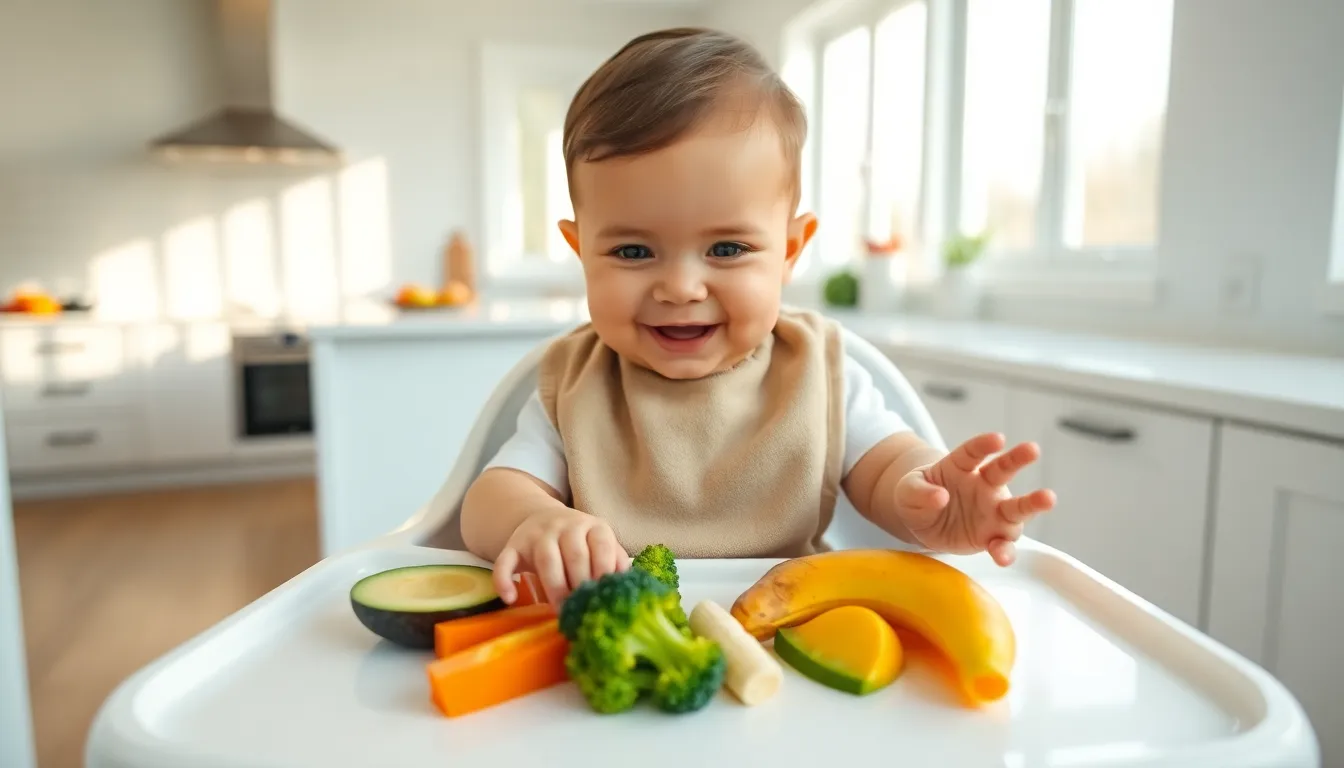
Baby-led weaning ideas can transform mealtime into an exciting adventure for babies and parents alike. This feeding approach skips purees and lets babies feed themselves soft, whole foods from the start. Many families choose baby-led weaning because it encourages independence, develops motor skills, and exposes little ones to different textures early on.
Starting solids is a major milestone. The good news? It doesn’t have to involve endless jars of mush. With the right baby-led weaning ideas, parents can offer safe, nutritious foods that babies can grab, explore, and enjoy at their own pace. This guide covers everything from timing and first foods to essential safety tips.
Table of Contents
ToggleKey Takeaways
- Baby-led weaning ideas let babies skip purees and self-feed soft finger foods, building independence and motor skills from the start.
- Look for readiness signs around six months: sitting upright, good head control, and interest in food before introducing solids.
- Start with soft, easy-to-grip foods like ripe avocado strips, steamed broccoli florets, and well-cooked sweet potato wedges.
- Introduce allergenic foods like eggs and fish early (around six months) to potentially reduce allergy risk—consult your pediatrician if there’s family history.
- Learn the difference between gagging (normal, noisy) and choking (silent emergency), and always supervise meals with your baby sitting upright.
- Embrace the mess—a splat mat and bib with a catcher make cleanup easier while your baby explores new textures and flavors.
What Is Baby-Led Weaning?
Baby-led weaning (BLW) is a method of introducing solid foods where babies feed themselves from the beginning. Instead of spoon-feeding purees, parents offer soft finger foods that babies can pick up, explore, and eat independently.
The approach was popularized by British health visitor Gill Rapley in the early 2000s. Her research suggested that babies are capable of self-feeding earlier than many parents realize. Baby-led weaning ideas center on one core principle: trust babies to regulate their own food intake.
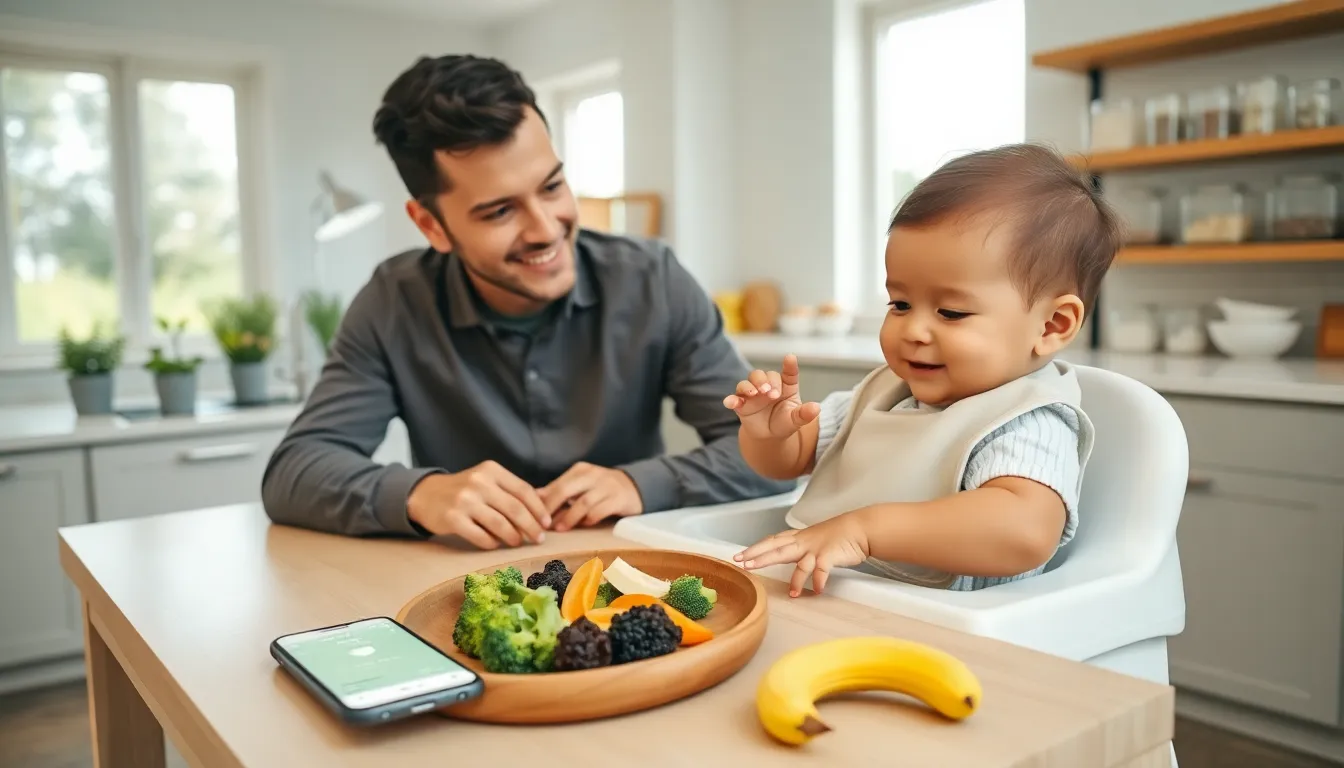
How does it work in practice? Parents place appropriate foods on a highchair tray or plate. The baby decides what to pick up, how much to eat, and when to stop. There’s no airplane spoon coming at their face. No pressure to finish a jar.
Benefits of baby-led weaning include:
- Better hand-eye coordination – Babies practice grasping, bringing food to their mouths, and chewing
- Exposure to varied textures – They learn to handle different food consistencies early
- Family mealtime participation – Babies eat what the family eats (with modifications)
- Self-regulation – Babies learn to recognize hunger and fullness cues
Some parents combine baby-led weaning with occasional spoon-feeding. This mixed approach works well for many families. There’s no single right way to introduce solids.
When to Start Baby-Led Weaning
Most babies are ready for baby-led weaning around six months of age. But, age alone isn’t the best indicator. Parents should watch for specific developmental signs that show a baby is prepared for solid foods.
Key readiness signs include:
- Sitting upright with minimal support
- Good head and neck control
- Loss of the tongue-thrust reflex (babies no longer push food out of their mouths automatically)
- Showing interest in food – reaching for it, watching others eat intently
- Ability to bring objects to their mouth
The American Academy of Pediatrics recommends exclusive breastfeeding or formula feeding for the first six months. After that, babies need additional nutrients, particularly iron, that breast milk or formula alone can’t provide.
Starting too early poses risks. Babies under six months typically lack the motor skills and digestive maturity needed for solid foods. Their airways are also smaller, which increases choking hazards.
What if a baby shows readiness signs at five months? Most pediatricians still advise waiting until closer to six months. A quick check-in with the baby’s doctor can help parents feel confident about timing.
Once those readiness signs appear, it’s time to gather some baby-led weaning ideas and start the food adventure.
Best First Foods for Baby-Led Weaning
Choosing the right first foods makes baby-led weaning safer and more enjoyable. The best options are soft enough to gum, easy to grip, and nutritious. Here are some top baby-led weaning ideas organized by category.
Soft Fruits and Vegetables
Fruits and vegetables make excellent starter foods. They’re colorful, flavorful, and packed with vitamins.
Great fruit options:
- Ripe banana (cut lengthwise or in spears)
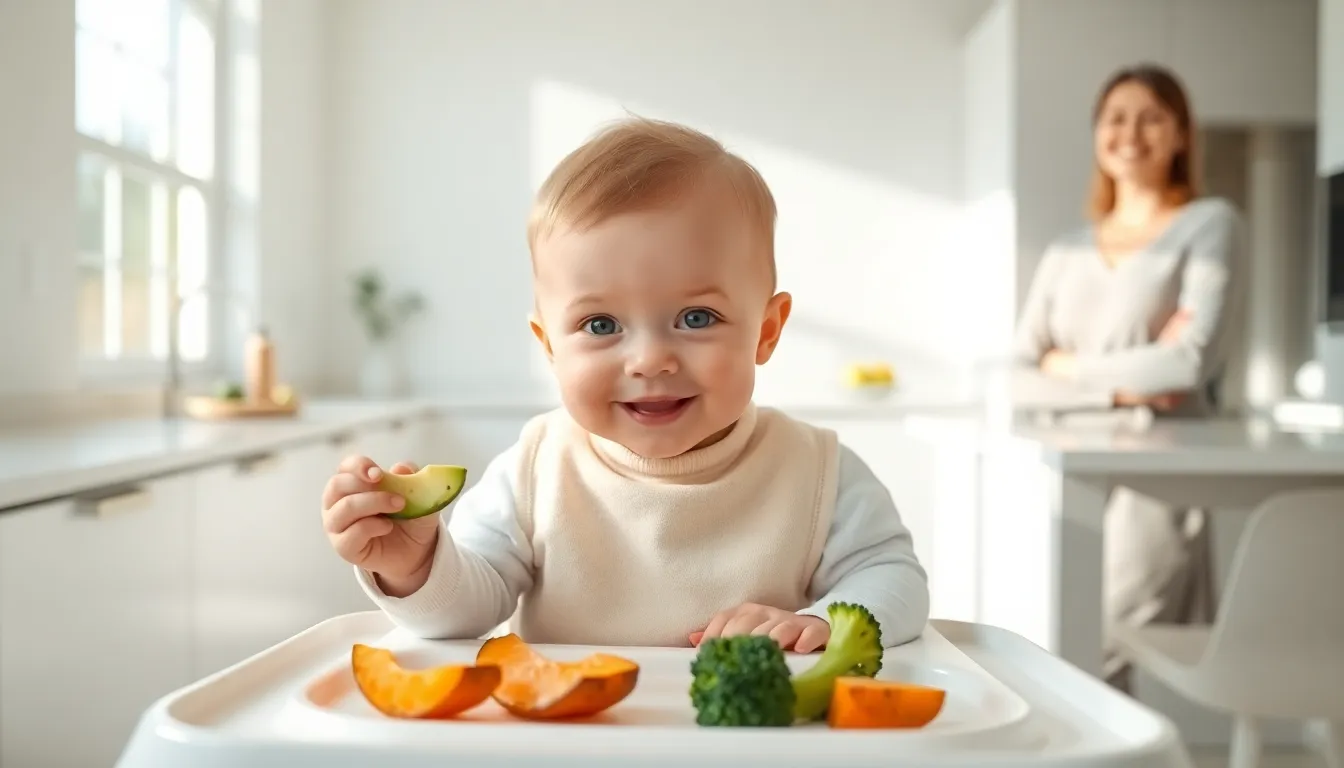
- Ripe avocado strips
- Soft mango slices
- Steamed apple wedges
- Ripe pear slices
- Watermelon sticks (remove seeds)
Vegetable favorites:
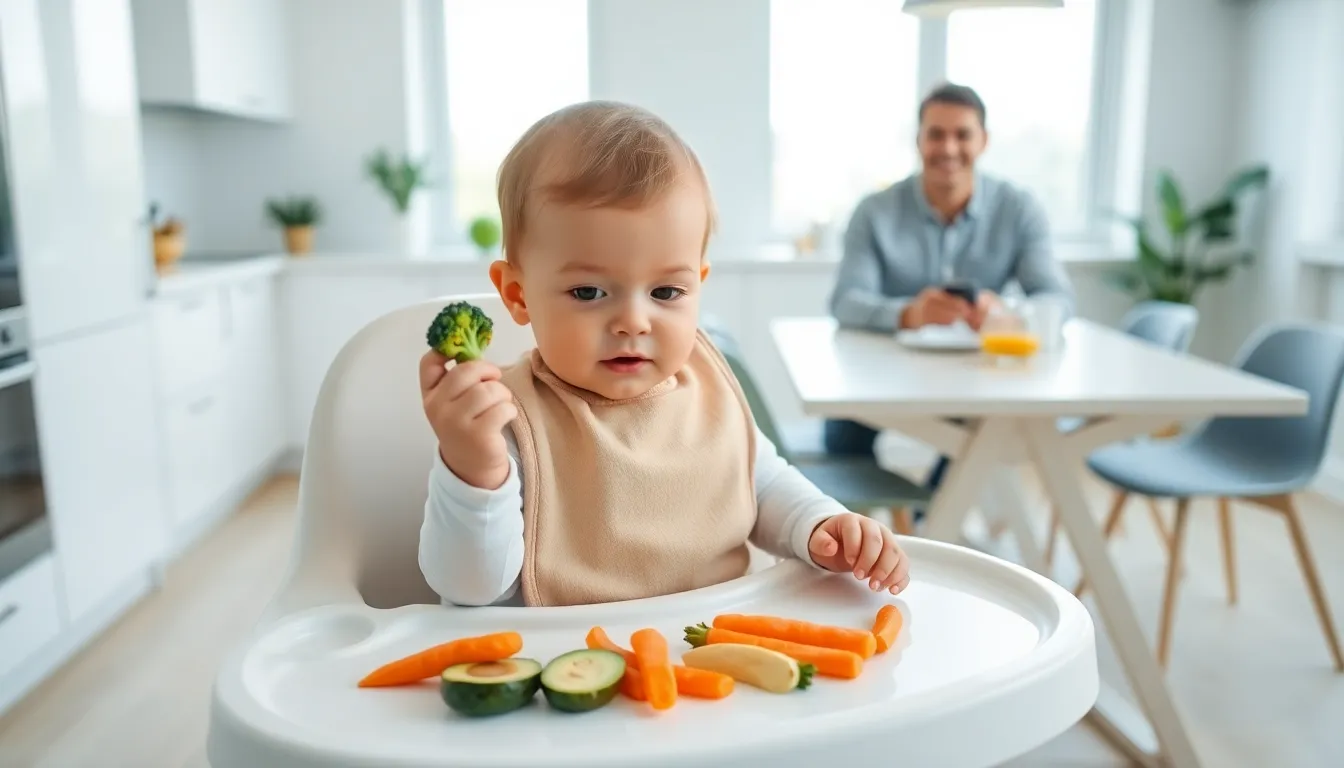
- Steamed broccoli florets (the stem acts as a natural handle)
- Roasted sweet potato wedges
- Steamed carrot sticks (cooked until very soft)
- Roasted butternut squash strips
- Steamed zucchini spears
- Soft-cooked green beans
The key is cooking vegetables until they’re soft enough to squish between two fingers. Raw carrots and apple chunks are too hard and present choking risks.
Protein-Rich Options
Protein supports growth and provides iron, a crucial nutrient for babies starting at six months.
Baby-friendly proteins:
- Shredded chicken (moist, not dry)
- Soft-cooked ground beef in strips or patties
- Flaked salmon (bones removed)
- Scrambled eggs
- Soft-cooked lentils
- Strips of firm tofu
- Nut butters spread thin on toast strips (avoid whole nuts)
Eggs and fish are common allergens. Current guidance from the American Academy of Allergy, Asthma & Immunology suggests introducing allergenic foods early, around six months, as this may actually reduce allergy risk. Parents with family allergy history should discuss timing with their pediatrician.
Other baby-led weaning ideas worth trying: toast strips with avocado, well-cooked pasta spirals, soft cheese cubes, and oatmeal fingers. Variety keeps babies interested and exposes them to different flavors.
Safety Tips for Baby-Led Weaning
Safety is the top priority with any baby-led weaning ideas. While BLW is generally safe when done correctly, parents should understand the difference between gagging and choking, and know how to prevent hazards.
Gagging vs. Choking
Gagging is normal. It’s a protective reflex that prevents choking. Babies gag more than adults because their gag reflex is triggered closer to the front of the mouth. A gagging baby will cough, sputter, and may turn red, but they’re still breathing and making noise.
Choking is silent. A choking baby can’t cough, cry, or make sounds. They may turn blue. This is an emergency requiring immediate intervention.
Foods to avoid:
- Whole grapes, cherry tomatoes, and berries (cut lengthwise into quarters)
- Whole nuts and seeds
- Popcorn
- Raw hard vegetables like carrots
- Hot dogs (cut lengthwise if serving)
- Chunks of cheese or meat
- Sticky foods like large globs of nut butter
- Honey (botulism risk for babies under one year)
Essential safety practices:
- Always supervise meals, never leave a baby alone with food
- Ensure the baby sits upright in a highchair
- Serve appropriately-sized pieces (finger-length strips work well for beginners)
- Learn infant CPR and choking first aid before starting solids
- Avoid distractions during meals, no screens, no eating in the car
Parents often worry about mess. Here’s the truth: baby-led weaning is messy. A splat mat under the highchair saves cleanup time. Bibs with catchers help too. The mess is temporary. The benefits last.