
Baby-led weaning examples help parents introduce solid foods without purees or spoon-feeding. This approach lets babies feed themselves from the start, building independence and motor skills. Many parents find it less stressful than traditional methods, and babies often enjoy mealtime more.
But where do you actually begin? Which foods work best? And how do you keep things safe?
This guide covers practical baby-led weaning examples, from soft fruits to protein options. Parents will find sample meal ideas organized by age, plus safety tips that make the process smoother. Whether a baby is 6 months or approaching their first birthday, these ideas provide a solid starting point.
Table of Contents
ToggleKey Takeaways
- Baby-led weaning examples include soft fruits like banana spears, avocado slices, and steamed vegetables that babies can safely grip and gum.
- Start baby-led weaning around 6 months when babies can sit upright and show interest in food.
- Use the “squish test”—if food squishes easily between your fingers, it’s soft enough for a baby to eat safely.
- Gagging is normal and protective, but parents should learn infant CPR before starting baby-led weaning for peace of mind.
- Babies get most nutrition from breast milk or formula until 12 months, so focus on exploration rather than portion sizes.
- Adapt baby-led weaning examples by age—stick-shaped foods for 6 months, smaller pieces as pincer grasp develops, and modified family meals by 9-12 months.
What Is Baby-Led Weaning?
Baby-led weaning (BLW) is a feeding method where babies skip purees and eat solid finger foods from the beginning. Instead of parents spoon-feeding mashed foods, babies pick up pieces of food and feed themselves.
The approach typically starts around 6 months of age. At this point, most babies can sit upright with minimal support and show interest in food. They’ve also lost the tongue-thrust reflex that pushes food out of the mouth.
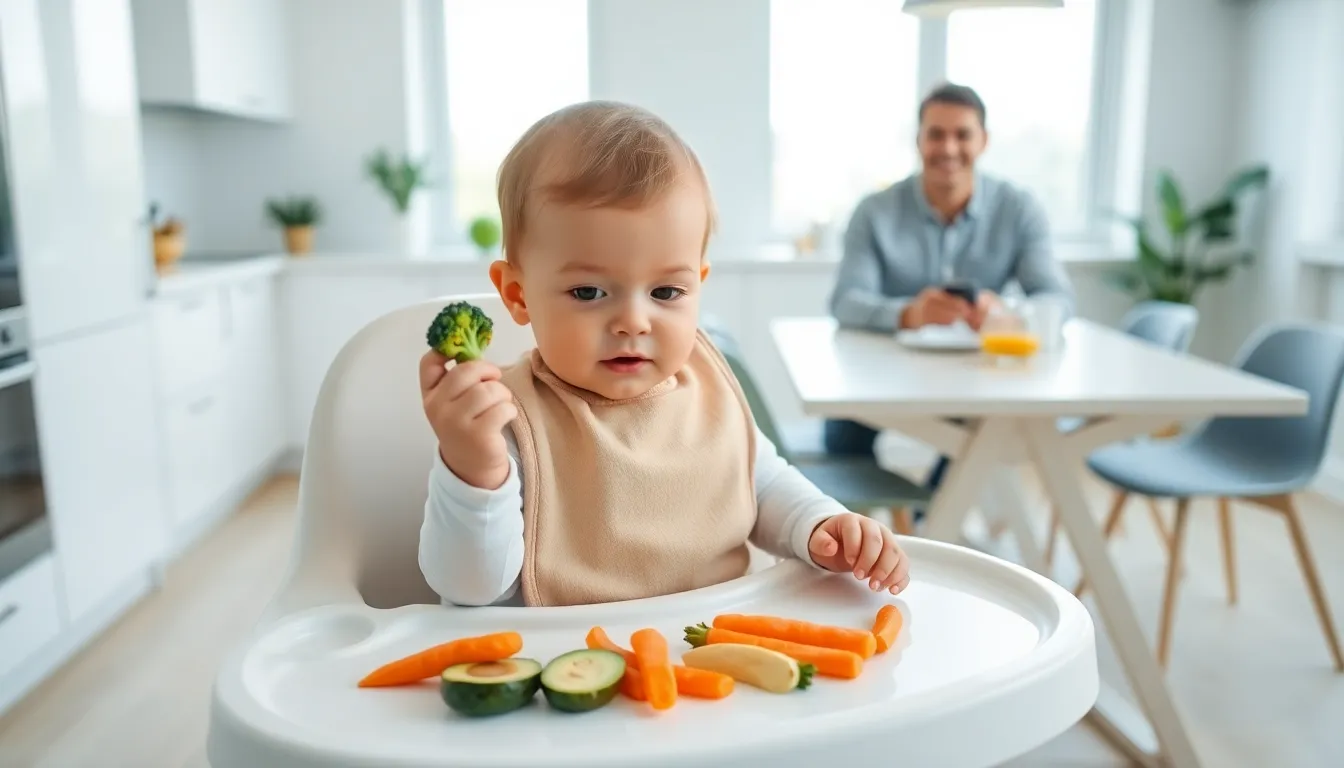
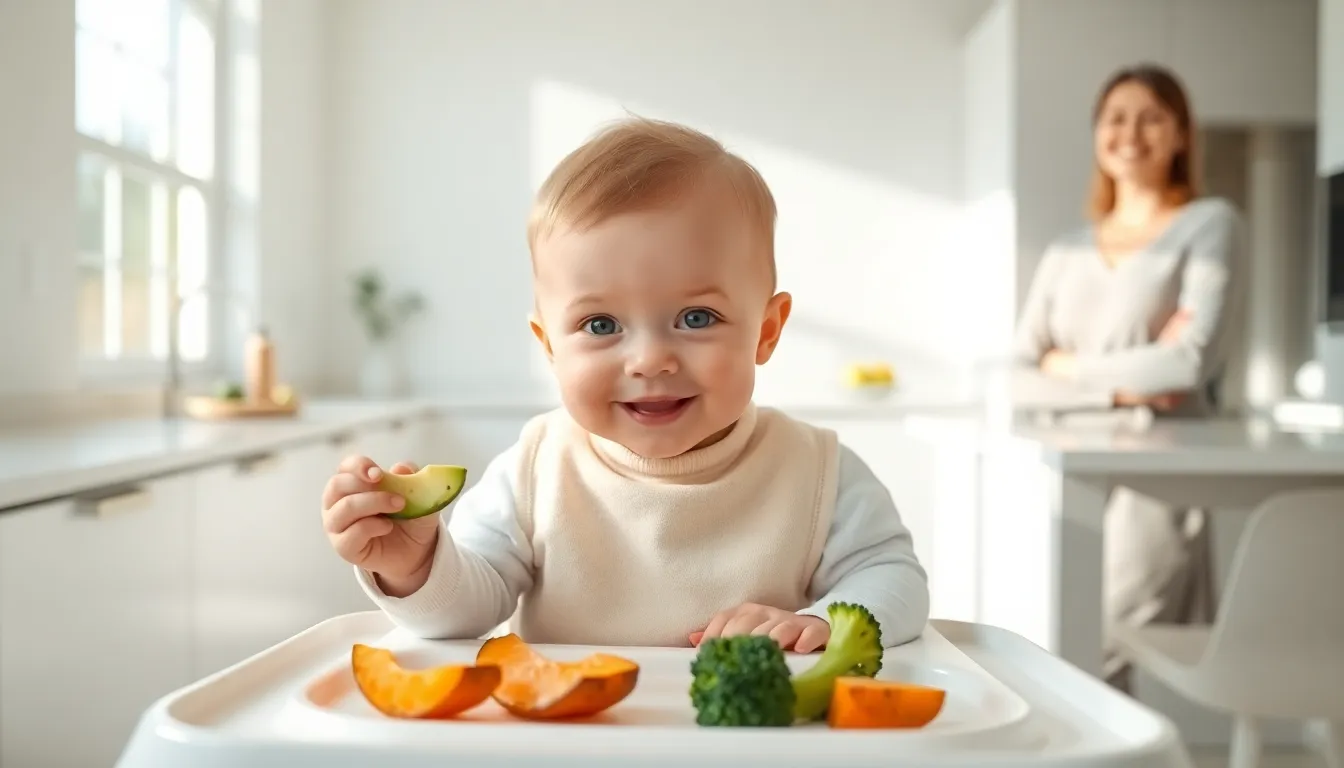
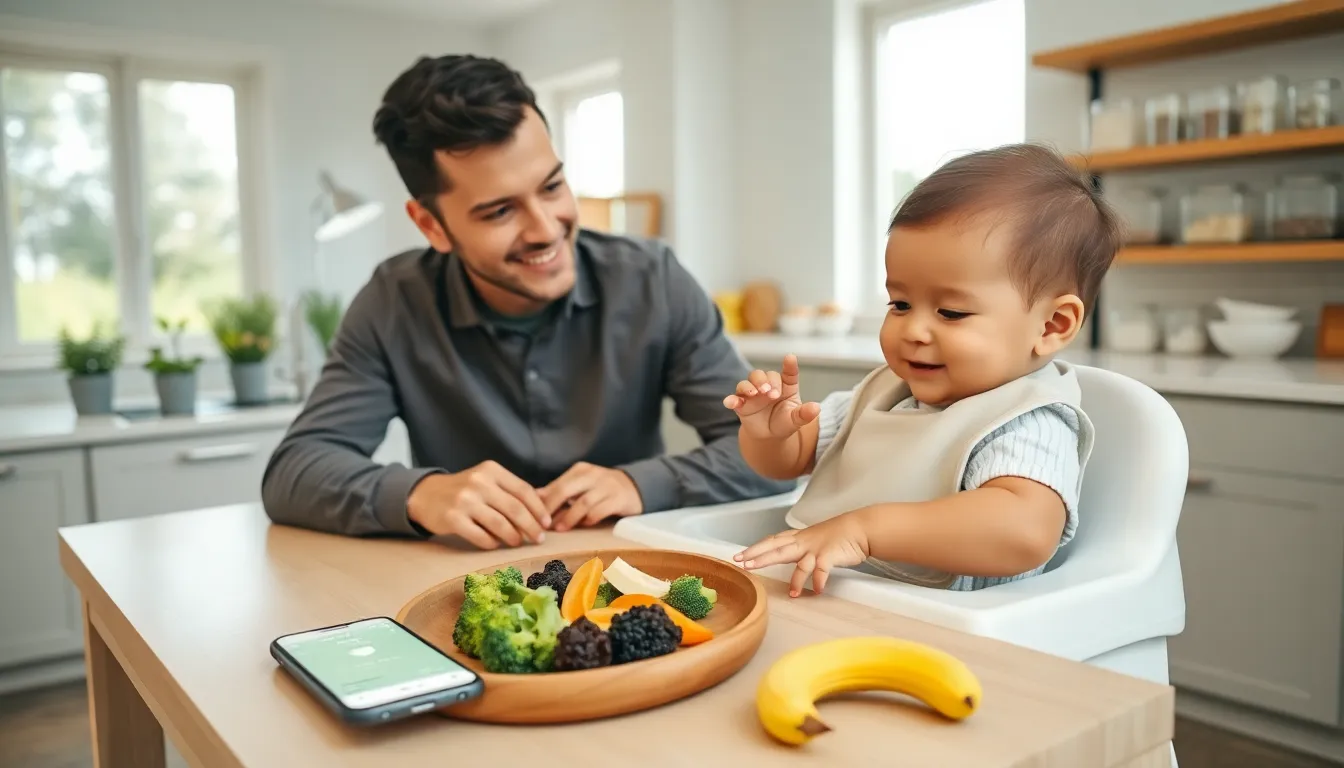
Baby-led weaning examples include offering soft banana spears, steamed broccoli florets, or strips of ripe avocado. The baby controls what goes into their mouth, how much they eat, and the pace of the meal.
This method offers several benefits:
- Motor skill development: Babies practice their pincer grasp and hand-eye coordination
- Exposure to textures: They experience various food consistencies early on
- Family meals: Babies can eat modified versions of what everyone else eats
- Self-regulation: Babies learn to recognize hunger and fullness cues
Baby-led weaning doesn’t mean abandoning all guidance. Parents still choose what foods to offer and ensure safety. The baby simply decides whether to eat and how much.
Some families combine baby-led weaning with occasional spoon-feeding, sometimes called “baby-led introduction to solids” or a mixed approach. There’s no single right way. What matters is that the baby explores food safely and develops a positive relationship with eating.
Best First Foods for Baby-Led Weaning
The best baby-led weaning examples share common traits: they’re soft enough to gum, easy to grip, and low in choking risk. Here are the top categories to consider.
Soft Fruits and Vegetables
Fruits and vegetables make excellent starter foods for baby-led weaning. They’re naturally soft when ripe or cooked, and most babies enjoy their flavors.
Popular fruit options include:
- Ripe banana (cut lengthwise into spears)
- Avocado slices (leave some skin on for grip)
- Ripe mango strips
- Soft pear wedges
- Steamed apple slices
- Ripe peach or nectarine pieces
Vegetable baby-led weaning examples:
- Steamed broccoli florets (the stem works as a handle)
- Roasted sweet potato wedges
- Steamed carrot sticks (cook until very soft)
- Roasted butternut squash strips
- Steamed zucchini spears
- Soft-cooked green beans
The key is texture. Foods should squish easily between two fingers, that’s roughly the pressure a baby’s gums can apply. Raw carrots, apples, or firm vegetables pose choking hazards and should be avoided until the baby develops chewing skills.
Protein-Rich Options
Protein sources provide iron and other nutrients babies need as they grow. Many work well as baby-led weaning examples with proper preparation.
Safe protein choices:
- Shredded or pulled chicken (moist, not dry)
- Ground beef formed into flat patties or meatballs
- Flaked salmon or other soft fish (check carefully for bones)
- Scrambled eggs
- Strips of soft-cooked tofu
- Well-cooked lentils or mashed beans
Meat should be moist and tender. Slow-cooked or braised options work better than grilled or baked meats that may be tough. Babies can suck on larger pieces of meat to extract flavor and nutrients, even if they don’t consume much at first.
Eggs are a common baby-led weaning example. Scrambled eggs are easy to grab and soft enough to gum safely. Some parents offer omelet strips or frittata fingers for variety.
Sample Baby-Led Weaning Meal Ideas by Age
Baby-led weaning examples change as babies develop new skills. Here’s what mealtimes might look like at different stages.
6 Months: Getting Started
At 6 months, babies are learning to grab and bring food to their mouths. Stick-shaped foods work best, they’re easier to hold with a palmar grasp.
- Breakfast: Banana spear + avocado slice
- Lunch: Steamed sweet potato wedge + soft broccoli floret
- Dinner: Shredded chicken + roasted zucchini strip
7-8 Months: Building Skills
Babies start developing their pincer grasp. Smaller pieces become manageable, though larger foods still work well.
- Breakfast: Scrambled eggs + soft pear slices
- Lunch: Flaked salmon + steamed carrot sticks + rice
- Dinner: Ground turkey meatball + roasted butternut squash + soft-cooked pasta
9-12 Months: Expanding Variety
Older babies handle more textures and smaller foods confidently. Baby-led weaning examples can include modified family meals.
- Breakfast: Toast fingers with nut butter + sliced strawberries
- Lunch: Black bean quesadilla strips + mango pieces
- Dinner: Pasta with meat sauce + steamed green beans + cheese cubes
Portion sizes don’t matter much in the early months. Babies get most nutrition from breast milk or formula until around 12 months. Food exploration builds skills and exposes babies to flavors, the actual intake varies widely and that’s normal.
Tips for Safe and Successful Baby-Led Weaning
Safety comes first with any baby-led weaning examples. These guidelines help prevent choking and make mealtimes positive.
Preparation matters:
- Always supervise babies during meals
- Ensure the baby sits upright in a highchair (not reclined)
- Cut round foods like grapes and cherry tomatoes lengthwise
- Avoid hard, raw vegetables and whole nuts
- Skip honey until after 12 months (botulism risk)
- Remove pits, seeds, and tough skins
Gagging vs. choking:
Gagging is common and actually protective, it helps babies learn to manage food safely. A gagging baby makes noise and may cough or sputter. Choking is silent. Parents should learn infant CPR before starting baby-led weaning. This knowledge provides peace of mind and preparedness.
Practical tips for success:
- Offer food when the baby is alert and calm, not overtired
- Start with one or two foods per meal
- Don’t rush, meals can take 20-30 minutes
- Expect mess (a splat mat helps with cleanup)
- Let the baby touch, squish, and explore before eating
- Avoid putting food directly in the baby’s mouth
Common baby-led weaning examples that work well:
Stick with foods that pass the “squish test” between your fingers. If it’s too hard to squish easily, it’s too hard for a baby to gum. Softer is always safer in the early months.
Patience helps. Some babies take to baby-led weaning immediately. Others need weeks of exploration before they eat meaningful amounts. Both responses are normal.